Pages

Friday, January 27, 2017

2016 Honda Accord Coupe

And 2016 Accord Sedan

For nearly four decades, the Accord has set the benchmark for vehicles in the midsize sedan class, historically the most popular class of vehicle with American car buyers. Accord is widely recognized as a segment-defining product, delivering class-leading interior space and superior ergonomics along with outstanding fuel efficiency, refined and responsive driving dynamics and top-class safety performance. As one important bellwether of its success, the Accord has been named to Car and Driver magazine's "10Best" list a record 29 times, a feat unmatched by any other automobile of any type.
Accord was the first Honda model and first vehicle from a Japanese automaker to be manufactured in America and has been in continuous production at the company's Marysville, Ohio auto plant using domestic and globally sourced parts since November 1982. It has also been produced in the company's plants in East Liberty, Ohio; in Birmingham, Alabama; and in El Salto, Jalisco, Mexico. Honda has produced more than 10 million Accords in North America for both local and global markets.
In 2012 Honda launched a completely reengineered 9th-generation Accord as a 2013 year model. The 9th-generation redesign featured a spacious and airy passenger cabin wrapped in a tauter and tailored design with a smaller exterior footprint than the model it replaced. The Accord also delivered more sporting and refined road manners, a higher quality interior and a host of new technologies. It featured the first application of new direct-injected 4-cylinder engine technology, a new continuously variable transmission (CVT), and new two-motor hybrid system. The Accord Hybrid, featuring the two-motor system, launched with the highest EPA fuel economy rating of any midsized sedan in America. The 2013 Accord was also one of the first mainstream sedans in America to incorporate advanced driver-assistive features, including Lane Departure Warning and Forward Collision Warning.
The 2016 Accord marks a further advancement of the 9th-generation Accord lineup. Building on the foundations established by the 2013 model, the more sophisticated, sportier, yet highly fuel efficient 2016 Accord features a further refined design, a more rigid body and upgraded chassis, and upsized wheels and tires on select models. All 2016 Accords can also now be equipped with Honda Sensing™ as a standalone option on all trims except Touring, which features Honda Sensing™ as standard equipment. Further changes include the expanded use LED exterior lighting, and new premium features and technologies, including the first combined application of Apple CarPlay®1 and Android Auto1 to a Honda model and among the first high-volume cars to apply the two systems in the marketplace.
Additional new available features for 2016, depending on model and trim, include remote engine start, front and rear parking sensors, rain sensing wipers, rear seat heaters, and a 60/40 split and folding rear seat. The Accord Sedan and Coupe, depending on trim, also feature new exterior color and interior fabrics and decor; and the Accord Coupe adds a new line-topping Touring model to match its Sedan counterpart.

Exterior and Interior Design

The Accord Sedan and Coupe both get a major facelift for 2016. In place of the previous wrap-around front bumper is a more sharply creased and intricately structured front fascia, the lower portion of which tucks into large intake-like meshed areas that house new LED fog lights (Sport trim and above). For the Accord Sedan, a more sharply creased and contoured aluminum hood replaces the steel version on earlier models and meets up with a brighter, more pronounced front grille. The new more expressive face of Accord is complimented by a sharply sculpted rear bumper fascia and new LED taillight design. The Accord Coupe also boasts more sporting and aggressive front and rear fasciae, a new grille, and restyled headlights and taillights.
While all models feature restyled wheels, the Accord Sedan in Sport and Touring trims get larger 19-inch (+1 inch for Sport, +2 inch for Touring) wheels and tires and a new side-sill garnish. The Touring sedan also gets a new rear deck spoiler. For the Accord Coupe, EX and EX-L grades get larger 18-inch (+1 inch) wheels and tires, while the new line-topping Coupe Touring rolls on the same 19-inch tires as its sedan counterpart. All models, Coupe and Sedan, feature the expanded use of LED lighting – LED taillights for all models, LED headlights for the new Touring Coupe, and LED daytime running lights (DRLs) for Sport and above trims.
The Accord also gets a revised exterior color palette with the addition of a new Deep Blue Opal Metallic for the Accord Coupe, as well as new fabric and color schemes, depending on model and trim, including:
  • New glossy piano black interior trim for Accord Sedan LX and Sport and Coupe LX-S
  • New carbon fiber-style dashboard trim and new cloth seat fabric with leatherette bolsters for the Sedan in Sport trim
  • A new meter design on Accord Sedan Sport and all Coupe models
  • New tricot seat fabric for Accord Sedan EX
  • New wood grain-style dashboard trim for Accord Sedan EX and above trims
  • New metal-style dashboard trim for Accord Coupe EX and above trims

Honda Accord Coupe

Body and Chassis Upgrades

The 2016 Accord's sportier design is matched by its improved dynamic performance. Accord body rigidity is increased for all models and is complimented by new high performance dampers, and a retuned electric power steering system that delivers even more linear and precise response. The Accord Sedan also gets a new aluminum hood, replacing the previous steel hood, benefitting both fuel efficiency and dynamic performance.
Within the Sedan lineup, the popular Sport trim receives upgraded performance capabilities courtesy of larger front brakes, 19-inch (+1 inch) wheels and tires, and retuned Active Sound Control; likewise the line-topping Touring trim (Coupe and Sedan) also benefits from the same larger front brakes and 19-inch wheels and tires, and for the first time is fitted with Amplitude Reactive Dampers and hydraulic subframe bushings, which provide for a more supple ride. This combination of these new body and chassis features and engineering changes is designed to give each model a more clearly defined and distinctive dynamic feeling within the Accord lineup.
The Accord also gets new Straight Driving Assist technology that helps reduce the driver's workload when driving on a crowned or canted road surface (see Chassis section for more details).

Honda Sensing™

All 2016 Accords can also now be equipped with Honda Sensing™, among the most comprehensive suite of advanced safety and driver-assistive technologies in the competitive class. Honda Sensing is offered as a standalone option on all trims except the Touring, which features Honda Sensing as standard equipment. Honda Sensing is comprised of the following technologies:
  • Collision Mitigation Braking System (CMBS) with sensor fusion technology
  • Lane Departure Warning (LDW)
  • Forward Collision Warning (FCW)
  • Lane Keeping Assist System (LKAS)
  • Road Departure Mitigation (RDM)
  • Adaptive Cruise Control (ACC)
All 2016 Accord models also feature a standard Multi-Angle Rearview Camera and Expanded View Driver's Mirror. The Touring trim adds new auto high-beam headlights that enhance nighttime visibility and driving convenience (see Safety and Driver Assistive section for more detail).

Display Audio with Apple CarPlay® and Android Auto1 Overview

The Accord audio and digital experience is also significantly upgraded with the application of a new 7-inch touchscreen Display Audio interface (EX and above trims) featuring Apple CarPlay® and Android Auto, as well as newly available HondaLink Assist (e911) and HD Radio®. Smartphone pairing is now simplified with a single USB cable connection, no longer requiring an HDMI cable connection. The new Display Audio system serves as the interface for new Apple CarPlay® and Android Auto, offering a multitude of new functions and features, including smartphone-linked navigation (Apple Maps or Google Maps), audio streaming, voice-controlled SMS text messaging and more.
The lower 7-inch Display Audio touchscreen is paired with an upper 7.7-inch display screen and steering-wheel controls. The upper screen can display audio settings, turn-by-turn directions (from embedded navigation when so equipped or from Android Auto or Apple CarPlay® navi apps), time and trip information (e.g. range, trip distance), LaneWatch and Rearview Camera displays, incoming calls, SMS text messages, and parking sensor alerts.

2016 Accord Major Engineering Changes and Feature Upgrades

Body and Chassis
  • Increased body rigidity courtesy of multiple new stiffeners, a thicker front shock tower bar and sturdier rear bulkhead
  • Retuned electric power steering
  • Aluminum hood (Sedan models)
  • New high performance dampers (all except Touring trims)
  • New high performance Amplitude Reactive Dampers (Touring trims)
  • Hydraulic rear subframe bushings (Touring trims)
  • Retuned Active Sound Control for sportier acceleration sound (Sport Sedan)
  • 18-inch (+1 inch) aluminum wheels and tires (EX and EX-L Coupe)
  • 19-inch aluminum wheels and tires (Sport sedan +1 inch and Touring trims +2 inch)
  • Larger front brake (Sport Sedan and Touring trims)
Exterior
  • Newly styled front and rear fasciae (all models)
  • Restyled aluminum (previously steel) hood (Sedan models)
  • New wheel designs (all models and trims)
  • Expanded application of LED lighting
  • New exterior color options and interior decoration
  • Rain-sensing wipers (Touring trims)
  • Front and rear parking sensors (Touring trims)
  • Side sill garnish (Sport and Touring Sedan)
  • Rear deck spoiler (Sedan Sport and Touring trims)
Interior
  • 7-inch touch screen Display Audio system (EX and above trims)
  • Android Auto and Apple CarPlay® (EX and above trims)
  • HondaLink Assist
  • Expanded application of SiriusXM Radio (added to EX)
  • New HD Radio® (EX and above trims)
  • 8-way power driver's seat (added to EX Coupe)
  • Driver's memory seat (added to EX-L and Touring Coupe)
  • 60/40-split and folding rear seat (added to Sport and above Sedans)
  • Remote engine start (CVT/AT EX and above trims)
  • Heated rear seats (Touring Sedan)
Safety and Driver Assistive
  • Honda Sensing™ technologies including Lane Keep Assist (LKAS), Road Departure Mitigation (RDM) with Lane Departure Warning (LDW), Adaptive Cruise Control (ACC), and Collision Mitigation Braking System (CMBS) with Forward Collision Warning (FCE).
  • Auto high-beam headlights (Touring trims)
  • Front and rear parking sensors (Touring trims)

Powertrains

The Accord Sedan and Coupe are offered with two advanced engines – a direct-injected 2.4-liter inline 4-cylinder engine, and a 3.5-liter V-6 that is the most powerful engine offered in a Honda sedan to date. Available transmissions include a sporty and fuel-efficient continuously variable transmission (CVT) for the 4-cylinder engines, unique 6-speed manuals for the 4-cylinder and V-6 engines, and a 6-speed automatic for V-6 models.

Advanced Safety Performance

In keeping with Honda's commitment to safety, the 2016 Accord features the Honda Sensing™ suite of advanced safety and driver-assistive technologies designed to expand the driver's situational awareness while sensing and responding to potential road hazards, including other vehicles, road obstacles and even pedestrians, even to the point of mitigating the possibility or severity of a collision.
The 2016 Accord is expected to receive the highest safety ratings – a 5-Star Overall Vehicle Score from the National Highway and Traffic Safety Administration (NHTSA) and a TOP SAFETY PICK+ rating from the Insurance Institute for Highway Safety (IIHS), including a GOOD rating in all crash modes.
The Accord incorporates Honda's next-generation Advanced Compatibility Engineering™ (ACE™) body structure, designed to more efficiently absorb and disperse the energy from a frontal collision, along with new ultra-high-strength door rings designed to help better protect occupants.
Standard safety and driver-assistive features include four-channel anti-lock brakes (ABS) with Brake Assist and Hill Start Assist; Vehicle Stability Assist™ (VSA®) with Traction Control; an Expanded View Driver's Mirror; dual-stage, multiple-threshold front airbags, driver and front passenger SmartVent® side airbags and side-curtain airbags for all outboard seating positions; and Tire Pressure Monitoring System (TPMS). See the Safety and Driver Assistance section for more information.

ABT VW Touareg


“The SUV success story started in 2002, also for us,“ says Hans-Jürgen Abt. The CEO of the globally largest tuner of cars produced by the Volkswagen Group knows what the car was with which the boom started for ABT Sportsline: “It was the Touareg, followed by the Q7, Tiguan, Q5 and Q3. But the Volkswagen is special to us.“ No wonder then that ABT has also enhanced the latest edition of this SUV. As always, ABT puts much emphasis on the “sports” in “SUV”.
ABT provides upgrades for the two turbo diesels in particular. The 3.0 TDI has been upgraded from 262 hp (193kW) to 290 hp (213 kW), the 4.2 now has 385 hp (283 kW), up from 340 hp (250 kW). Torque has been raised from 800 Nm to 880 Nm, in the smaller version from 580 Nm to 650 Nm. Powerful enough, surely, since the car is also quite often used as a towing vehicle, while still being expected to look good. And the ABT Touareg surely does that.
The specially developed aerodynamic package makes for this 2.3t car’s assertive appearance. The front grille add-on and head light covers make it look more powerful, the rear wing and rear skirt set with the ABT double tail pipe bezels make it look more sporty – especially so if augmented by ABT Sportsline sport-type wheels. Available are the CR and DR in 20 and 22’’. Of course, they are also available with the right premium tires.
But power also has to be kept in check, so ABT uses ABT springs or the ABT Level Control system, air springs lowering the CoG by up to 40 mm on the front axle and 30 mm on the rear axle. But this does not make the ABT Touareg less comfortable at all. An ABT Sportsline SUV is always racy and versatile, an ideal travel companion and transporter that is dynamic into the bargain. And with the 3.0 or 4.2 TDI it is even economical!

Dodge Challenger Shaker

Dodge Challenger Shaker


Designed to deliver maximum performance and the most Dodge muscle-car heritage in the brand’s lineup, the new 2015 Challenger R/T Shaker, R/T Plus Shaker and first-ever 392 HEMI® Scat Pack Shaker models celebrate 45 years of the functional “cold-air grabbing” hood scoop that “shakes” with the legendary HEMI V-8 engine’s movement.
“After selling out last year’s Shaker model production in just four days, our hardcore Challenger customers demanded we bring back the Shaker – plus offer more power and more performance,” said Tim Kuniskis, President and CEO, Dodge and SRT Brands. “We listened, and for 2015, the new Dodge Challenger lineup offers the legendary Shaker hood expanded to include our 485 horsepower HEMI V-8 delivering up to 113 more horsepower than last year, plus even more track-proven hardware and technology – a combination our enthusiasts have been waiting for.”
New 2015 Dodge Challenger R/T Shaker and R/T Plus Shaker are available for ordering now, with the high-performance 392 HEMI Scat Pack Shaker model available for customer orders in March.

45 years of the Shaker hood

As the model name suggests, the legendary “cold-air grabbing” Shaker not only looks good with its Satin Black center-mounted hood scoop, snorkeling up from the engine compartment, it also directs cooler air back into the 5.7-liter, or now 6.4-liter (392 cu.in.), HEMI® V-8 engine. And, like the original 1970 Challenger R/T with the Shaker hood, the new 2015 Challenger models continue the Dodge tradition of an engine-mounted hood scoop that “shakes” with the powertrain’s movement.
Designed for muscle-car buffs who can’t help but tinker with their toys, the Challenger R/T Shaker, R/T Plus Shaker and 392 HEMI Scat Pack Shaker models feature a functional Shaker hood with Mopar cold-air intake, conical air filter and optimized air box for improved airflow and performance. Lift the hood and enthusiasts will also be treated to an under-hood “Shaker” graphic – reminiscent of the 1970s original.

Challenger R/T Shaker

For drivers who like to share their performance credentials, the new Challenger R/T Shaker adds a functional Shaker hood with cold-air induction and Mopar conical air filter to the Challenger R/T model’s 5.7-liter HEMI V-8 engine delivering up to 375 horsepower and 410 lb.-ft. of torque. In addition the package adds hood-to-tail Satin Black Shaker graphic stripes, Shaker hood badges, black deck-lid spoiler with Parkview backup camera, “Shaker” startup screen, Satin Black fuel-filler door with heritage “FUEL” lettering, projector fog lamps, 20-inch polished aluminum satin finish wheels with black pockets and premium black cloth performance seats with Ballistic 2 inserts and Tungsten accent stitching.
The new TorqueFlite eight-speed transmission is available (372 horsepower, 400 lb.-ft. of torque) and includes Sport mode with paddle shifters, plus Fuel Saver Technology with four-cylinder mode and interactive Decel Fuel Shut Off (iDFSO).

Super Track Pak

For maximum performance on road and track, Challenger R/T Shaker includes the Super Track Pak with a full complement of race-bred chassis upgrades, including a 0.5-inch lowered suspension, high-performance Bilstein shock absorbers, high-performance brakes, three-mode electronic stability control (ESC) calibration with “full off” and three-season Goodyear Eagle F1 tires (Goodyear Eagle RSA all-season performance tires available). For a more road-holding stance, the Dodge Challenger R/T Shaker is available with 20-by-9-inch matte black lightweight forged aluminum wheels (late availability).

Challenger R/T Plus Shaker

Adding to the Challenger R/T Shaker model’s standard equipment, the new 2015 Challenger R/T Plus Shaker includes unique heated and ventilated Nappa leather performance seats with “Shaker” logo stitched in Black and Ruby Red, or Black and Sepia; unique door bolsters with graduated accent stitching, premium floor mats with “Dodge” logo, Dodge Performance leather-wrapped steering wheel with power tilt-and-telescoping column, Uconnect 8.4-inch touchscreen display with AM/FM/SiriusXM Radio, Bluetooth, 3-D navigation-capable and Uconnect Access with 9-1-1 call/Assist Call , six premium speakers and 276-watt digital amplifier. For a more road-holding stance, the Dodge Challenger R/T Plus Shaker is available with 20-by-9-inch matte black lightweight forged aluminum wheels.
Expanding on the Super Track Pak’s capability, the Challenger R/T Plus Shaker adds a shortcut button to the new Dodge Performance Pages embedded in the class-exclusive Uconnect 8.4-inch touch screen radio that provides visible performance information, such as programmable shift light indicator, reaction time, 0-60 times, G-force indicator and lap times in the 7-inch TFT customizable cluster display.
The new 2015 Dodge Challenger R/T Plus Shaker model has a starting U.S. MSRP of $38,495.

Challenger 392 HEMI Scat Pack Shaker

As the “King of all Shakers,” the 392 HEMI Scat Pack Shaker ups-the-ante with its best-in-class 485 horsepower and 475 lb.-ft. of torque, delivering up to 113 more horsepower and a 65-lb.-ft. leap in torque compared with the 5.7-liter Challenger R/T Shaker models — representing more than a 30 percent jump in horsepower and 18 percent jump in torque. The coupe’s best-in-class power enables it to turn mid 4-second 0-60 mph times and low 12-second quarter mile times.
Adding to the standard equipment found on the Dodge Challenger R/T Plus Shaker, the first-ever 2015 Challenger 392 HEMI Scat Pack Shaker includes a 6.4-liter (392 cu.in.) HEMI V-8 engine with 485 horsepower and exposed functional shaker hood with engine-mounted high-flow cold-air induction, Tremec six-speed manual transmission (new TorqueFlite eight-speed transmission with paddle shifters is available), Scat Pack fender badge, 392 HEMI Shaker hood badge, 180 mph primary speedometer, active stainless steel performance dual exhaust system and 220-amp alternator. In addition, the Challenger 392 HEMI Scat Pack Shaker takes the Super Track Pak suspension to the next level with a Brembo four-piston high-performance brake package and 20-by-9-inch polished aluminum wheels.

Scat Pack Appearance Group

With the available Scat Pack Appearance Group, the 2015 Challenger 392 HEMI Scat Pack Shaker model replaces the hood-to-tail Satin Black Shaker graphic stripes for the signature Satin Black Bumble Bee rear stripe – a Dodge heritage cue that dates back to 1968. Additional equipment includes Scat Pack-logo embroidered performance seats in Black or Ruby Red Nappa leather, animated “Scat Pack” Bumble Bee splash screen and 20-by-9-inch lightweight forged matte black aluminum wheels. MSRP for the Scat Pack Appearance Group is $1,100.
The new 2015 Dodge Challenger 392 HEMI Scat Pack Shaker model has a starting U.S. MSRP of $42,495 (excluding $1,000 gas-guzzler tax with manual transmission).

Heritage Hues

Heritage and high-impact exterior colors for the 2015 Dodge Challenger Shaker model range include B5 Blue, Sublime Green and TorRed. Other factory colors include Billet Silver Metallic, Bright White, Pitch Black and Granite Crystal Metallic.

Dodge continues to build on the Scat Pack legacy

In 1968, Dodge united the brand’s performance vehicle enthusiasts through the creation of the “Scat Pack Club.” The Scat Pack Club quickly transformed and expanded from an enthusiast club, into an over-arching Dodge performance philosophy. This shared philosophy ultimately evolved into the desire for even more performance. Dodge and Mopar brands partnered to respect this need by delivering factory-engineered performance stage kits that would ultimately become known as “Scat Packs.”
For the 2015 model year, the all-new 2015 Challenger R/T Scat Pack and 392 HEMI Scat Pack Shaker models were created to deliver even more performance to the Dodge lineup. With a best-in-class 485 horsepower and 475 lb.-ft. of torque, track-ready performance features, heritage styling and the availability of the class-exclusive TorqueFlite eight-speed automatic transmission – these two Challenger models are targeted directly at hardcore Dodge enthusiasts.

Friday, May 20, 2016

Lamborghini Huracán LP 610?4 Avio


Lamborghini Huracán LP 610-4 Avio made its debut at this year's Geneva Motor Show. Produced in a run of only 250, this special edition's name, colors and materials pay tribute to the world of aviation and aeronautics.
From the outset, Lamborghini has been inspired by powerful fighter jets, from which it has borrowed technological, aerodynamic, ergonomic and stylistic solutions. References to the aeronautical world in Lamborghini's current product line include digital instrument clusters; controls located on the center console as in airplane cockpits; the red engine 'start' button; the tight stylistic language of exterior lines; and a broad range of matt exterior finishes.
The new Huracán Avio offers a host of premium functional features in its standard configuration including lifting system, cruise control and GPS*. But the true uniqueness of the Avio lies in its interior and exterior finishes. White or grey painted details contrast with the body color and enhance exterior details such as the tops of the side member, the side view mirrors and the lip on the front spoiler. A double stripe, again in white or grey, runs along the roof and down the front bonnet.
The door panels further identify the special Avio version with the logo L63, where L stands for Lamborghini and '63 is the year the company was founded. A tricolor cockade, the symbol distinguishing nationality used in aeronautics, is placed between the letter and the number.

Tuesday, May 10, 2016

BMW M4 Coupe

2015 BMW M4 Coupe (UK-Version)  - Front, 1920x1080, #1 of 40

The launch of the new BMW M3 Saloon and new BMW M4 Coupé heralds the arrival of the fifth-generation of the iconic high-performance sports car from BMW M. For the first time the Coupé and Saloon models receive individual model names, in deference to the different model series that provide their basis.
Another first is the adoption of a turbocharged engine for this BMW M model: the high-revving, 3.0-litre six-cylinder in-line engine with M TwinPower Turbo technology has been specifically developed for this purpose, and produces a maximum output of 431hp. Its peak torque of 550Nm is available across a very wide rev range starting at just 1,850rpm, and exceeds the figure recorded by the outgoing BMW M3 by roughly 40 per cent. In spite of this, the new engine also achieves a reduction in fuel consumption and emissions of around 25 per cent.
To maximise dynamic ability and ensure excellent efficiency, a weight loss of over 80kgs has been achieved compared to a comparably equipped predecessor model. Specific weight-saving measures include the increased use of lightweight materials: both models now feature a carbon-fibre reinforced plastic roof.
2015 BMW M4 Coupe (UK-Version)  - Front, 1920x1080, #24 of 40
BMW M engineers have paid particular attention to the car’s aerodynamic performance, and incorporated the latest Active M Differential amongst numerous other technical highlights. During the development process the engineers worked closely with BMW Motorsport’s professional racing drivers, with extensive testing and set-up work carried out on the Nürburgring Nordschleife circuit.
2015 BMW M4 Coupe (UK-Version)  - Rear, 1920x1080, #11 of 40

The balance of the overall concept: high power, low weight, driving pleasure.

The new BMW M3 Saloon and new BMW M4 Coupé are formed from a host of finely blended elements, all working in perfect harmony to deliver outstanding performance, precision and agility on road and track.
With the new BMW M3 Saloon and M4 Coupé, the engineers sought to optimally channel the air around the car in the quest for ultimate performance, while also ensuring the engine, powertrain and brakes receive the requisite cooling. Even when operating under heavy loads on the racing circuit. The aggressively styled front apron, smooth under-body and the clearly defined lip spoiler at the rear of the M3 Saloon (or integrated bootlid spoiler at the rear of the BMW M4 Coupé) reduce lift by an equal amount at the front and rear axle, to the benefit of handling.
Albert Biermann, Head of Development at BMW M GmbH, said: “The way in which we channel the inflowing air through the engine oil cooler creates a venturi effect, which reduces front axle lift and, in so doing, improves the steering.”
The Aero Curtain and M side gills, the latter with integrated Air Breathers minimise turbulence in the front wheel arches. These elements, together with the aerodynamically optimised side mirrors in familiar M twin-stalk style, are not only distinctive design features, they also help to reduce drag.
The new six-cylinder in-line engine: high-revving, turbocharged unit combines the best of both worlds.
The new BMW M3 Saloon and new BMW M4 Coupé mark a return to the classic six-cylinder in-line engine configuration, as used on the second and third-generations of this iconic sports car.
The new engine sees a slight power upgrade over the previous V8 to 431hp, now delivered between 5,500 and 7,300rpm, with maximum revolutions set at an unusually high figure for a turbocharged engine: 7,600rpm. Peak torque has been increased by roughly 40 per cent to 550Nm, and is maintained over a very wide rev range (1,850–5,500rpm). The standard sprint from 0-62mph takes both cars just 4.3 seconds with manual transmission, or just 4.1 seconds with the optional M DCT, while the top speed is 155mph (electronically limited). The new powerplant also boasts excellent fuel economy: the combined consumption in the EU cycle is as high as 34mpg and CO2 emissions are as low as 194g/km, an improvement of more than 25 per cent over the previous model’s figures. Regulated pollutant emissions are EU6-compliant.
The M TwinPower Turbo technology comprises two fast-responding mono- scroll turbochargers, High-precision direct injection, VALVETRONIC variable valve timing and Double-VANOS continuously variable camshaft timing. VALVETRONIC and Double-VANOS work in tandem to seamlessly control intake valve lift. The result is a smooth and efficient power delivery, with very sharp response and reduced fuel consumption and emissions.
The six-cylinder engine features a closed-deck crankcase design, which is very rigid and allows cylinder pressures to be increased for improved power output. And instead of liners, the cylinder bores feature a twin-wire arc- sprayed coating, which results in a significant reduction in engine weight.
A further technical highlight is the forged, torsionally rigid crankshaft which, as well as providing increased torque-carrying capacity, is also lighter in weight. This significantly reduces rotating masses, resulting in improved throttle response and acceleration.
A sporting engine sound, in keeping with BMW M tradition, is ensured thanks to the lofty rev range of the new engine and an innovative flap arrangement in the twin-pipe exhaust system. The electrically-controlled flaps just before the rear silencer minimise exhaust backpressure and produce a sound that is striking and unmistakable over the entire engine speed range, as well as giving precise feedback on engine load.
The different selectable drive modes, programmable with the MDrive Manager and activated via the iconic steering wheel ‘M’ buttons, offer drivers a choice of preconfigured, perfectly balanced vehicle set-ups which also feature different engine sound profiles.

BMW M4 Coupe (UK-Version)

Track-ready engine oil supply system for outstanding performance

On the track, the exceptional driving dynamics of the BMW M3 Saloon and BMW M4 Coupé place extra demands on the engine oil supply system, the design of which reflects the extensive motorsport experience of BMW M. The low-weight magnesium oil sump, for example, features a special cover to limit movement of the oil under the effects of strong lateral acceleration. Under extreme longitudinal acceleration and deceleration, an oil extraction pump and sophisticated oil return system situated close to the turbocharger also help to maintain stable oil circulation. Oil is therefore supplied continuously to all engine components in all driving situations – whether in everyday motoring or during hard driving on the track.
2015 BMW M4 Coupe (UK-Version)  - Engine, 1920x1080, #30 of 40

Sophisticated cooling concept for maximum performance

The exceptional performance potential of the BMW M3 Saloon and BMW M4 Coupé places exacting demands on temperature management, in not only the engine but also the peripheral assemblies. In order to ensure optimum operating temperatures across all types of usage, BMW M engineers have developed an extremely effective cooling system.
For example, alongside the two sophisticated turbocharger units, the air intake system of the six-cylinder engine also includes an indirect intercooler, maximising charge pressure and engine output. Moreover, as well as a main radiator, the cooling system also comprises a water cooler repositioned to the side for the high and low temperature water circuits, and the engine and transmission oil (if the M Double Clutch Transmission is specified). An additional electric coolant pump cools the turbocharger bearing mounts when the car is stationary.

Six-speed manual gearbox with new throttle blipping function:

2015 BMW M4 Coupe (UK-Version)  - Interior Detail, 1920x1080, #38 of 40
The standard transmission specified is a six-speed manual gearbox with a robust double-plate clutch. This unit is considerably more compact than its predecessor and also 12kgs lighter. To increase shift comfort, the manual gearbox uses innovative new carbon friction linings in its synchroniser rings. The gearbox blips the throttle on downshifts - previously a feature reserved for the M Double Clutch Transmission - improving the smoothness of the driving experience and helping to enhance stability.

Seven-speed M Double Clutch Transmission with Drivelogic and Launch Control

The optional transmission for the new BMW M3 Saloon and M4 Coupé is the third-generation M Double Clutch Transmission (M DCT). As well as changing gear automatically, in manual mode it enables ultra-fast gear changes with no interruption in the flow of power. The integrated Launch Control function ensures optimum sprinting performance off the line, producing acceleration figures that would be simply unattainable with the manual gearbox. In addition, the system allows for a range of extra features, including Stability Clutch Control, which opens the clutch when the car is understeering to bring it back into line, and also the selectable Drivelogic modes that give the BMW M3 and BMW M4 more comfortable, more economy-focused or even sportier characteristics depending on driver choice. The additional seventh gear over the manual gearbox allows longer gear ratios – and delivers the efficiency gains you would expect as a result.
Taking advantage of the extremely light yet impressively durable properties of CFRP (carbon-fibre reinforced plastic), the engineers have been able to construct the driveshaft from this material.
“The impressive stiffness and low weight of the CFRP tubing allow the driveshaft to be constructed as a single-piece unit with no centre bearing. As well as a weight-saving of 40 per cent over its predecessor, we have achieved a reduction in rotating masses and therefore improved drivetrain dynamics.” explains Albert Biermann.

The rear-wheel drive chassis with Active M Differential

2015 BMW M4 Coupe (UK-Version)  - Brakes, 1920x1080, #28 of 40
The Active M Differential makes a considerable contribution to the superb dynamics of the new BMW M3 Saloon and BMW M4 Coupé. With further weight-savings thanks to hollow, and hence lighter, output shafts, the Active M Differential uses an electronically controlled multi-plate limited-slip differential to optimise traction and directional stability. Working precisely and rapidly, the control unit links up with the DSC (Dynamic Stability Control) system and also takes into account the position of the accelerator pedal, the rotational speed of the wheels and the car’s yaw rate.
Every driving situation is therefore precisely analysed and an impending loss of traction on one side of the car identified at an early stage. The degree of differential lock – which may be anywhere between 0 and 100 per cent – is adjusted as required within a fraction of a second, enabling wheel spin to be prevented on slippery surfaces, in instances where the right and left rear wheel have widely differing friction coefficients or in tight bends and when changing direction with particular vigour.
The M Dynamic Mode – a sub-function of the Dynamic Stability Control (DSC) system – allows enthusiastic drivers to probe the limits of the new cars while retaining an electronic safety net at all times. The system tolerates greater wheel slip and therefore easy drifting, although DSC will still step in if the car ventures over the limits – unless it is switched off completely.
Aluminium suspension elements ensure sharper dynamics The core expertise of BMW M resides in developing cars that offer superb driving dynamics and real driver satisfaction, yet not at the expense of everyday usability. In order to achieve these aims with the significantly increased performance capability of the new BMW M3 Saloon and new BMW M4 Coupé, the suspension of the outgoing BMW M3 has been redesigned with painstaking attention to detail.
In the front suspension the use of lightweight aluminium construction for components such as control arms, wheel carriers and axle subframes saves 5kgs over a conventional steel design. Play-free ball joints and elastomer bearings developed specially for the cars ensure an optimum and direct transfer of forces both laterally and longitudinally, while an aluminium stiffening plate, CFRP engine strut brace and additional bolted joints between the axle subframe and the body structure all help to increase the rigidity of the front end.
Also lighter is the new five-link rear axle. All the control arms and wheel carriers are manufactured using forged aluminium, which reduces the unsprung masses of the wheel-locating components by around 3kgs compared with the previous model generation. The rigid connection between the rear axle subframe and the body – without the use of elastic rubber elements – is borrowed from motorsport and serves to further improve wheel location and therefore directional stability.
Tyre development was critical from the outset, and both cars feature 19-inch wheels as standard for the UK market, in either Ferric Grey or optionally Jet Black. These specially developed forged wheels make a significant contribution to the reduction in the cars’ unsprung masses. BMW M engineers have taken great care to ensure all the components between the steering wheel and tyres work together harmoniously and therefore provide maximum driving precision and lateral stability, while retaining good ride comfort.

Electric Power Steering with three settings

The electromechanical steering system in the new BMW M3 Saloon and new BMW M4 Coupé represents a new development from BMW M. The integrated M Servotronic function electronically adjusts the level of steering assistance according to the car’s speed. The system offers the driver three settings as standard, which can be selected at the touch of a button: COMFORT, SPORT and SPORT+ modes allow the level of steering assistance to be adapted to suit any given situation and the driver’s personal tastes.
The Adaptive M suspension, fitted as standard for the UK market, also provides COMFORT, SPORT and SPORT+ modes, enabling the driver to choose between a more comfortable damper setting for urban driving, for example, or a stiffer set-up for dynamic driving on country roads. A third option minimises body movements and maximises dynamic performance for use on the track.
The standard new BMW M Compound brakes boast impressive feel, outstanding stopping power and a high resistance to fade. Far lighter than conventional equivalents, they contribute to a substantial reduction in unsprung masses. Even lighter BMW M Carbon ceramic brakes can be specified as an option - gold callipers denote their fitment.

Lightweight engineering: shedding weight in all the right places.

Intelligent lightweight design was a top priority in the development of the BMW M3 Saloon and BMW M4 Coupé. The goal was to minimise kerb weight in order to give both models outstanding driving dynamics and exemplary efficiency. These measures have delivered impressive results, with the BMW M4 Coupé (manual transmission) weighing 1,497kgs, around 80kgs lighter than a comparably equipped predecessor model – with all the benefits that reduction brings.
On the outgoing models, the CFRP roof was confined to the Coupé version. Now, for the first time, the four-door BMW M3 Saloon gets this striking design and functional feature as standard. The CFRP roof brings weight-savings of 5kgs in the case of the BMW M3 Saloon and more than 6kgs in the case of the BMW M4 Coupé. It also lowers the vehicle’s centre of gravity, which has a positive impact on driving dynamics.
Aluminium is used for the front wings and the bonnet, as opposed to conventional steel, and makes an important contribution to the low overall weight, while at the same time improving axle load distribution.
On the M4 Coupé, the shape of the new bootlid has been optimised for aerodynamic performance, while the use of a carbon-fibre and plastic compound saves additional weight.
The new BMW M3 Saloon and new BMW M4 Coupé also feature a CFRP driveshaft. The high rigidity and low weight of the CFRP tube mean that the driveshaft can be produced as a single-piece component, without a centre bearing. This achieves weight-savings of 40 per cent over the previous model and a reduction in rotating masses, which in turn results in more dynamic powertrain response.
A further use of CFRP can be found in the engine compartment for the engine strut brace. Weighing only 1.5kgs it offers superior rigidity to a comparable aluminium component, and at the same time plays a key part in the excellent steering response and precision of both vehicles. The use of carbon-fibre in these models is a reminder that BMW is a global leader in high-strength, lightweight CFRP construction, and that it was BMW who brought out the first mass-production vehicle with a body consisting entirely of this material – the innovative BMW i3.

Design: striking use of forms underlines standout performance capability.

“The superior performance of the BMW M3 Saloon and BMW M4 Coupé should be obvious at first glance,” explains Karim Habib, Head of Design at BMW Automobiles. “Indeed, the exterior design has a visual impact that elevates the BMW M design language to a new level of expression, highlighted by a purposeful character, emotional appeal and dynamic verve.”
Viewed from the front, the BMW M3 Saloon and BMW M4 Coupé have a powerfully expressive ‘face’, with a modern take on the twin headlight arrangement and a distinctive double-slat kidney grille with M designation. The aggressive front apron, with its trio of large intakes, supplies cooling air to the engine and brakes. Among the other hallmark BMW M design features is the characteristic powerdome on the bonnet, which hints at the potential of the muscular M TwinPower Turbo engine and creates space for the intercooler. The twin-stalk side mirrors are another classic BMW M design feature.
The sides of both cars clearly show the hallmark BMW proportions of a long bonnet, long wheelbase, set back glasshouse and short front overhang, further emphasised by familiar M design elements. The new M side gills perform both a stylistic and a functional role: integrated into them are Air Breathers, which team up with the Aero Curtains in the front apron to help optimise the airflow around the wheel arches and therefore improve aerodynamics.
The dark colour of the CFRP roof (with its contoured roofline) gives both models a lower-slung and more compact appearance, as the eye perceives the roof pillars – painted in body colour – to be the uppermost point of the car. A flowing roofline then gains in momentum once again as it heads rearwards, increasing aerodynamic downforce and giving the rear a more muscular look at the same time.
At the rear, there are greater differences in the two models. The BMW M3 Saloon is fitted with a lip spoiler to reduce lift, while the tailgate of the BMW M4 Coupé features an integrated rear spoiler and is made from a carbon-fibre compound.
Both models feature prominently flared rear wheel arches, which, in combination with the wide track, give the cars a very purposeful stance. The high-gloss pair of twin exhaust tailpipes are framed by the sculptural rear apron with its integrated diffuser.

Interior design: flawless ergonomics in a sporting ambience.

2015 BMW M4 Coupe (UK-Version)  - Interior, 1920x1080, #33 of 40
Inside, drivers will be greeted by the interior architecture prioritising unimpeachable ergonomics and a clear driver focus. However, the emphasis has naturally been put on an even more sporting ambience. There are a host of traditional BMW M equipment details, including M door sill finishers, M gearshift lever, M design circular instruments with white graphics, M leather steering wheel (with M logo, chrome trim and iconic triple-colour contrast stitching) and metallic shift paddles (if the M DCT gearbox is specified). The BMW Individual headlining is finished in Anthracite.
The bespoke front seats take inspiration from the bucket seats fitted in racing cars, and feature a full-size single-piece back panel. This means the construction of the seats is very flat, while the high, width-adjustable side bolsters and low-set seat surface allow an ideal seating position and provide excellent support. Despite this, these BMW M seats also include electric adjustment and heating as standard. On the seat surface, the stitching, upholstery segmentation and perforation lend the seats a slim-fitting feel, whilst the BMW M logo on the seat is illuminated for the first time.
Like the front seats, the distinctively contoured backrests of the rear seats also offer exceptional lateral support: they are made from a lightweight composite material and can be folded in a 60:40 split. This gives the BMW M3 and BMW M4 a level of everyday usability that is well beyond the norm for high-performance sports cars.

Dimensions BMW M4 Coupé vs. predecessor:

  • F82 vs. F32 vs. E92 M
  • Length 4,671 mm + 33 mm + 56 mm
  • Width 1,870 mm + 45 mm + 66 mm
  • Height (incl. aerial) 1,383 mm + 21 mm - 41 mm
  • Wheelbase 2,812 mm + 2 mm + 51 mm
  • Track front 1,579 mm + 34 mm + 39 mm
  • Track rear 1,603 mm + 9 mm + 64 mm

Dimensions BMW M3 Saloon vs. predecessor:

  • F80 vs. F30 vs. E90 M
  • Length 4,671 mm + 47 mm + 91 mm
  • Width 1,877 mm + 66 mm + 60 mm
  • Height (incl. aerial) 1,430 mm + 1 mm - 17 mm
  • Wheelbase 2,812 mm + 2 mm + 51 mm
  • Track front 1,579 mm + 36 mm + 39 mm
  • Track rear 1,603 mm + 20 mm + 64 mm
Equipment: extensive standard equipment joined by a host of options that enhance dynamics and comfort.
The new BMW M3 Saloon and new BMW M4 Coupé possess an extensive list of standard equipment, which reflects their performance-oriented character but also their excellent everyday usability. The UK specification has been enhanced substantially from the predecessor model with a number of additions; these include technical features such as Adaptive M suspension, 19-inch M light alloy wheels and front and rear PDC; comfort items such as the heated and electric BMW M seats and exterior-folding mirrors; aesthetic features such as High-gloss Shadowline exterior trim and finally the full BMW Professional Media package with upgraded Bluetooth system.
In addition, customers can choose from a broad range of optional equipment to give the cars either an additional sporting edge, or boost comfort levels further still. For those buyers wishing to personalise their cars yet further, the wide-reaching spectrum of BMW Individual – including BMW Individual paint finishes, BMW Individual Merino leather and BMW Individual interior trim elements – will be available later in 2014.
2015 BMW M4 Coupe (UK-Version)  - Rear, 1920x1080, #23 of 40

Further options for comprehensive driver information

For track drivers BMW M has developed a free BMW M Laptimer app, which allows owners to analyse their personal driving style. Once their smartphone is hooked up to the car – via USB cable or the car’s snap-in adapter – customers can operate the BMW M Laptimer app easily using the iDrive Touch Controller. The app then records speed, longitudinal and lateral acceleration, engine revs, the gear engaged, steering angle, accelerator position and fuel consumption. The data can subsequently be analysed via graphic displays on the customer’s smartphone, including the driver’s reactions. Another feature allows two recordings on the same circuit to be compared corner-by-corner: the readings can be either the driver’s own or data shared via email. Naturally, the BMW M3 Saloon and BMW M4 Coupé are also available with the wide variety of driver assistance systems and mobility services introduced under the BMW ConnectedDrive banner, some of which will already be familiar from the BMW 3 Series and BMW 4 Series. Among the highlights are the latest-generation of the Professional Navigation system, offering extra capability, sharper graphics and 3D elements for the map display; Driving Assistant Plus, which warns the driver of a looming collision with a pedestrian; Adaptive full LED headlights with an intelligent anti-dazzle High-beam Assistant and a further developed version of Active Cruise Control with Stop & Go function. The optional M Head-up Display comes with additional, M-specific functions such as a gear display, rev counter and Optimum Shift Indicator.

Audi A3 Cabriolet


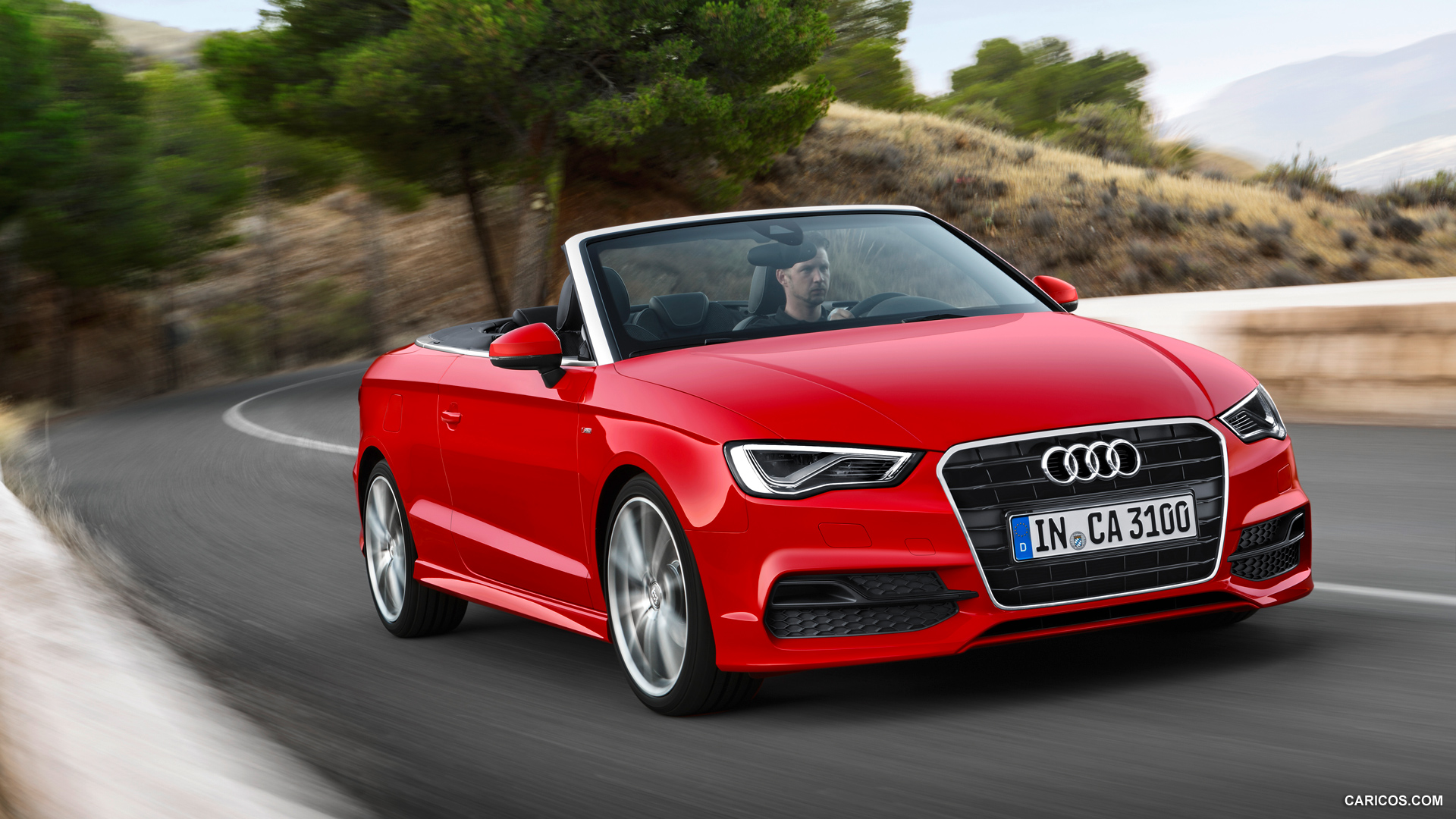
Sporty, elegant and multi-faceted – Audi presents the new A3 Cabriolet. The compact four-seater impresses at first glance with its flowing lines and soft top. It is also at the top of its class technically – with systematic lightweight design, new engines, multi-faceted networking and high-performance assistance systems.

Exterior design

The new Audi A3 Cabriolet has grown compared to the previous model: its length increased from 4.24 to 4.42 meters (13.91 to 14.50 ft), its wheelbase from 2.58 to 2.60 meters (8.46 to 8.53 ft) and its width from 1.77 to 1.79 meters (5.81 to 5.87 ft). Only its height (1.41 meters [4.63 ft]) was reduced by 15 millimeters (0.59 in). This gives the four-seat convertible a more elegant and sporty look on the road. Luggage capacity grew by 60 liters (2.12 cubic ft), and it is easier to load. The wheel housings can handle wheels up to 19 inches in size.
The front of the Audi A3 Cabriolet is characterized by the Singleframe radiator grille. The flat headlights give it a resolute look; they emphasize the horizontal styling and the air intakes in the bumper. Audi offers headlights with LED technology as an option; they are the only LED headlights in the compact segment to offer variable headlight leveling control.
The rear overhang plays a key role in the harmonious proportions of the two-door car. The windshield frame is made of aluminum – and an aluminum-look trim strip runs around the entire car. On the flanks, the design features a taut tornado line and contoured sheet metal surfaces that create a fascinating interplay of light and shadow.

The soft top

The new A3 Cabriolet has a soft cloth top that is stretched over a lightweight kinematic mechanism made of magnesium-steel, and it complements the car's design perfectly. At the press of a button, the top opens or closes electro-hydraulically in less than 18 seconds, even while driving up to 50 km/h (31.07 mph). In the opened state, the top – folded into three layers – rests in a tray that barely affects luggage capacity, which is 287 liters (10.14 cubic ft). The fully automatic soft top has a glass rear window and is offered in Black as standard. A fully automatic acoustic top is available as an alternative; it has a thicker inner foam layer which reduces the already low interior noise level of the A3 Cabriolet even more. The acoustic top is available in the three exterior colors of Black, Gray and Brown, and its roofliner is available in black and lunar silver. A wind deflector is standard for the Ambiente trim line, and head-level heating is an option for the front seats. An active rollover protection system protects the occupants in case of a rollover accident. It consists of two spring-loaded plates that are recessed into the body.

Body

In the base version, the car's curb weight is just 1,365 kilograms (3009.31 lb) – the new Audi A3 Cabriolet is around 50 kilograms (110.23 lb) lighter than the previous model despite its larger size and better comfort. Including its special reinforcements, which deliver high torsional stiffness, the body-in-white weighs 30 kilograms (66.14 lb) less than previously; the engine hood is made of aluminum. Weight was also significantly reduced in the interior and in the engines. This let Audi – a pioneer in this technical field – set an impressive best value in the compact class. Customers can choose from 16 different exterior paints for the body.

Interior


Elegantly drawn lines and clean surfaces also typify the interior design of the new Audi A3 Cabriolet. The instrument panel is lean and low, its front is slightly curved, and the center console is angled slightly towards the driver. The large, round air vents in jet design, the control panel for the air conditioner and the three-dimensional trim strips bring premium class elegance into the interior. The optional lighting package includes a touch-sensitive switch for the reading lights – a feature being offered for the first time.
As in every Audi, workmanship quality is uncompromisingly high, and the car's controls are simple, intuitive and convenient. It offers enough space for four adults, and the seatbacks of the two rear seats can be folded down which opens up a wide through-load area. The steering wheel and seats are new designs, and the also new electro-mechanical parking brake is operated by a pushbutton on the center console.
The trim lines are named Attraction, Ambition and Ambiente. The S line sport package for the Ambition line immerses the interior space entirely in black. Customers can choose cloth, leather or Alcantara/leather upholstery materials. The Audi design selection lasso brown conveys an exclusive look.

Audi A3 Cabriolet

Assistance systems

Driving in the new Audi A3 Cabriolet is even more impressive with its highly developed assistance systems. The driver information system with efficiency program and attention assist are already standard features on the Ambition and Ambiente lines. The options program includes adaptive cruise control, Audi side assist, Audi active lane assist, camera-based traffic sign recognition, park assist with selective display and various feature levels of the Audi pre sense safety system.
Also extremely attractive is the line-up of infotainment components; at the very top are the Bang & Olufsen sound system and MMI Navigation plus. The super-slender seven-inch monitor extends from the instrument panel electrically. The user terminal has a rotary/push button control that is designed as a touchwheel with MMI touch – the touchwheel’s top surface is a touch-sensitive pad for inputting alpha and numeric characters.
The Audi connect concept aims to network the driver with his or her environment. In the new Audi A3 Cabriolet, this function – which supplements MMI Navigation plus – provides a connection to the Internet, and whenever possible via the fast LTE transmission standard (available starting in November). The integrated WLAN hotspot lets passengers use their mobile devices to surf and e-mail freely.
The system brings Internet services from Audi connect into the car for use by the driver – from navigation with Google Earth images and Google Street View to online traffic information and services such as Facebook and Twitter. The latest service from Audi connect is parking information; it shows available parking spaces in parking and underground garages and parking lots.

Drivetrain

The three newly developed engines being offered in the Audi A3 Cabriolet at its launch all emphasize the car's sporty character. The two TFSI engines produce 103 kW (140 hp) and 132 kW (180 hp) from 1.4 and 1.8 liters of engine displacement, respectively. The 2.0 TDI develops 110 kW (150 hp); Other engines will follow – ranging from the 1.6 TDI with 81 kW (110 hp) to the 2.0 TFSI, which will power the Audi S3 Cabriolet with 221 kW (300 hp). All engines in the new Audi A3 Cabriolet combine the technologies of direct injection, turbocharging and a start-stop-system.
On average, the three engines offered at market launch have twelve percent better fuel economy than the engines in the previous model – and they do so while improving driving performance. The 1.4 TFSI, for example, accelerates the new Audi A3 Cabriolet from 0 to 100 km/h (62.14 mph) in 9.1 seconds, yet its combined fuel consumption value is 5.0 liters fuel per 100 kilometers (47.04 US mpg) and its CO2 emissions are 114 g/km (183.47 g/mile). Also contributing to this efficiency is Audi cylinder on demand (COD) technology, which deactivates two of the engine's cylinders in low load conditions.
The new Audi A3 Cabriolet also features state-of-the-art technology in power transmission. At its launch, the 1.8 TFSI is being offered with a seven-speed S tronic; together with the Audi drive select vehicle dynamics system, it offers a free-wheeling function that further improves fuel economy. The 1.4 TFSI and 2.0 TDI are each paired with a manual six-speed transmission. This will be followed by the quattro all-wheel drive system – another new feature and USP of the compact Cabriolet.

Chassis

The chassis of the new Audi A3 Cabriolet impresses with sophisticated technology that delivers sporty handling, superior vehicle safety and a high level of comfort. Some of the components of the MacPherson front suspension are made of aluminum; the four-link rear suspension handles longitudinal and transverse forces separately. The power steering system features an efficient electromechanical drive.
The ESC stabilization control system integrates an electronic limited slip differential – this makes handling even smoother and safer at the vehicle’s cornering limits while driving fast through curves. The brakes are powerful and durable. Wheel sizes range from 16 to 19 inches, and tire sizes range up to 235/35. Two versions of the sporty chassis are offered; the sport suspension lowers the body 15 millimeters (0.59 in), while the S line sport suspension is 25 millimeters (0.98 in) lower.
High-end options in the new Audi A3 Cabriolet include the Audi drive select vehicle dynamics system (standard on the Ambition line). The driver can use this system to modify engine management, power steering, S tronic and air conditioning operation over several modes. This control also extends to optional systems such as the adaptive suspension control system Audi magnetic ride, adaptive cruise control, adaptive light and progressive steering whose steering gear ratio becomes increasingly more direct when turning.
The new Audi A3 Cabriolet will come off the assembly line at Audi's plant in Gyor, Hungary, which Audi has expanded with an investment of more than 900 million euros. Sales begin this autumn in Germany, and first deliveries will be in the first quarter of 2014. The base price for the 1.4 TFSI (103 kW with cylinder on demand technology) is 31,700 euros. Many sporty and comfort/convenience options round out the standard features; they include the deluxe key and S sport seats with integrated head restraints and diamond topstitching in the shoulder area.

Audi S3 Cabriolet (preliminary data)

In the top S3 version, which will follow shortly after the car's initial launch, the compact Cabriolet delivers very sporty driving performance. The 2.0 TFSI engine produces 221 kW (300 hp) and transfers 380 Nm (280.27 lb-ft) of torque to the crankshaft. With a six-speed S tronic, the car completes the sprint from 0 to 100 km/h (62.14 mph) in 5.4 seconds. The combined fuel consumption of the four-cylinder turbo is 7.1 liters per 100 kilometers (33.13 US mpg). The quattro drivetrain operates with an electronically-controlled hydraulic multi-plate coupling. The body was lowered 25 millimeters (0.98 in), and 17-inch brakes are mounted behind the 18-inch wheels. 19-inch wheels are also available in conjunction with Audi magnetic ride. Progressive steering is standard.

Tuesday, September 15, 2015

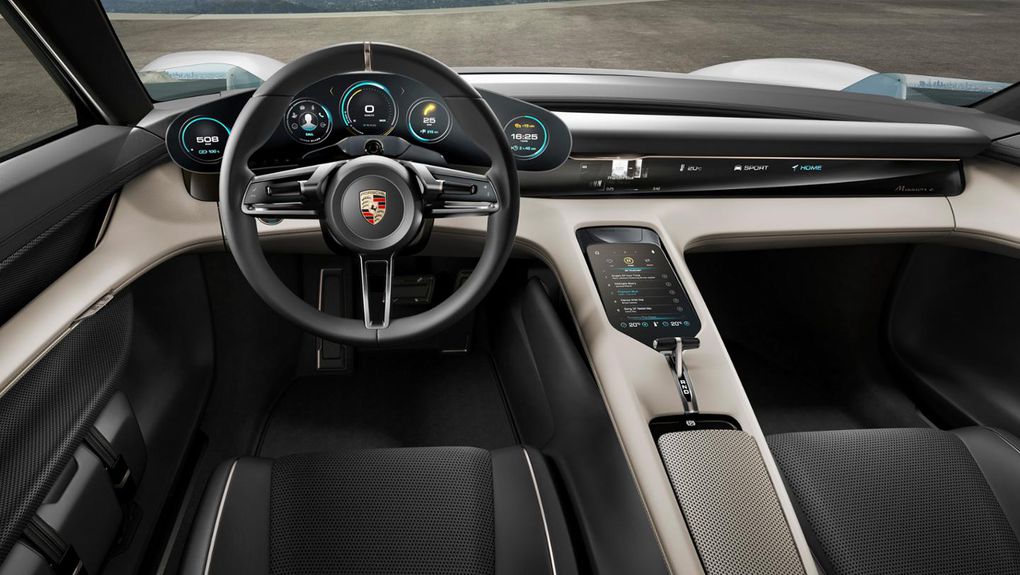
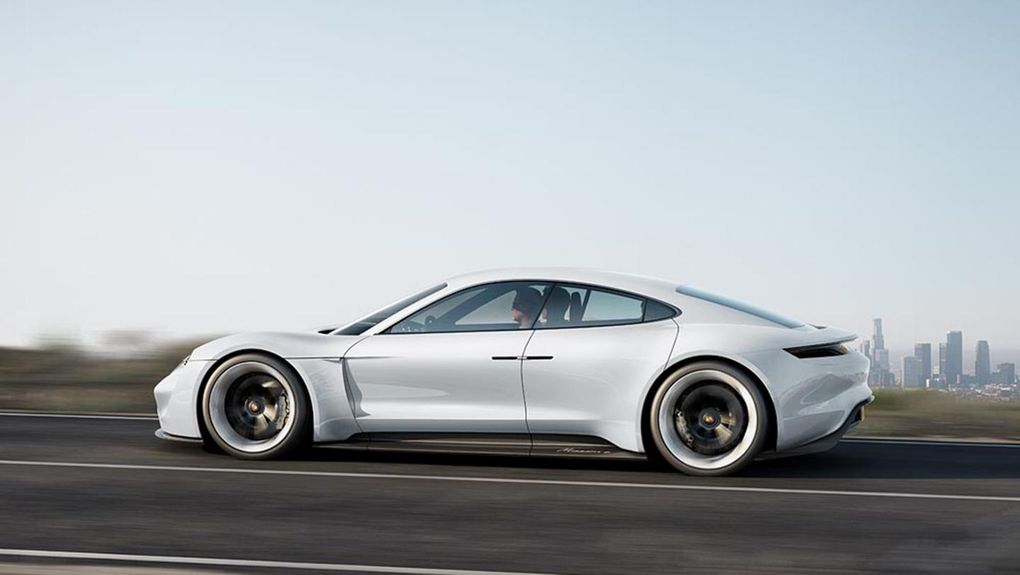
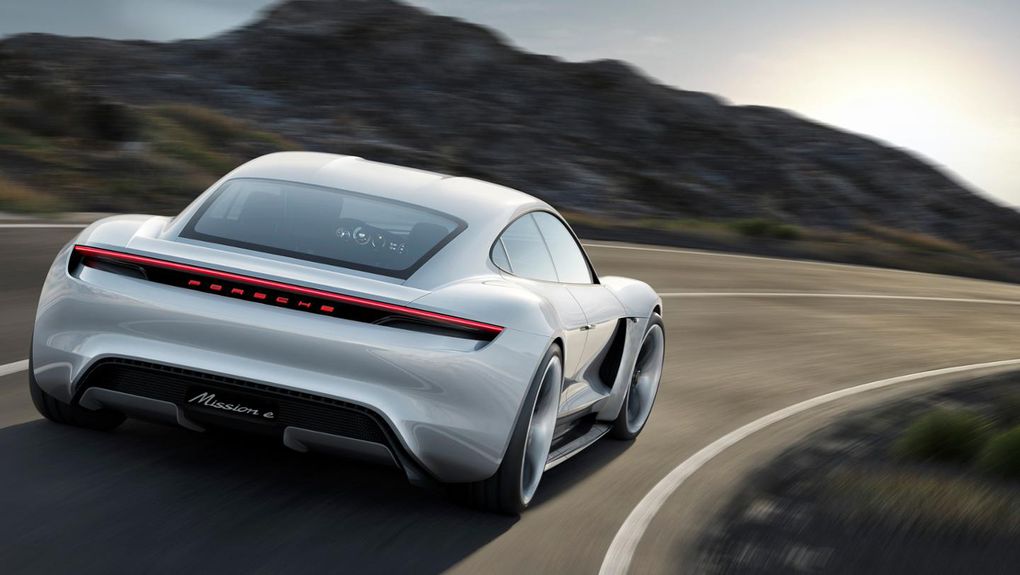
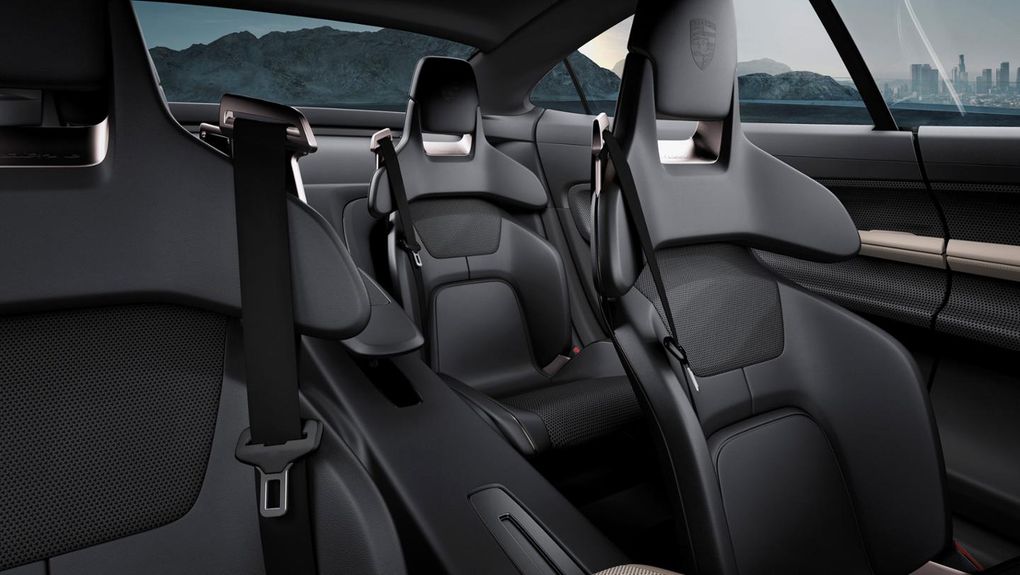
Porsche Mission E announced, an electric sports sedan that charges faster than a Tesla

As a concept, the Mission E has the usual assortment of far-off-sounding features — OLED instrumentation and eye tracking, for instance — but one feature in particular caught my eye: an emotion-tracking camera camera in the rear-view mirror shows an emoticon in the instrument cluster. (In other words, if you're happy, the car knows, and it tells you it knows.) "The fun factor can be saved together with individual information such as the route or speed, and it can be shared with friends via a social media link," Porsche says.
The Mission E is absolutely a concept — there's no talk of a production window yet — but the indication is that this is happening sooner or later. How could it not?
Hint: Use the 's' and 'd' keys to navigate